
The Colonial City & the Revolution · 1712
The 1712 New York slave revolt
Twenty three enslaved New Yorkers set a fire and took up arms on an April night in 1712. Nine colonists died, and the city answered with the harshest slave code it had yet written.
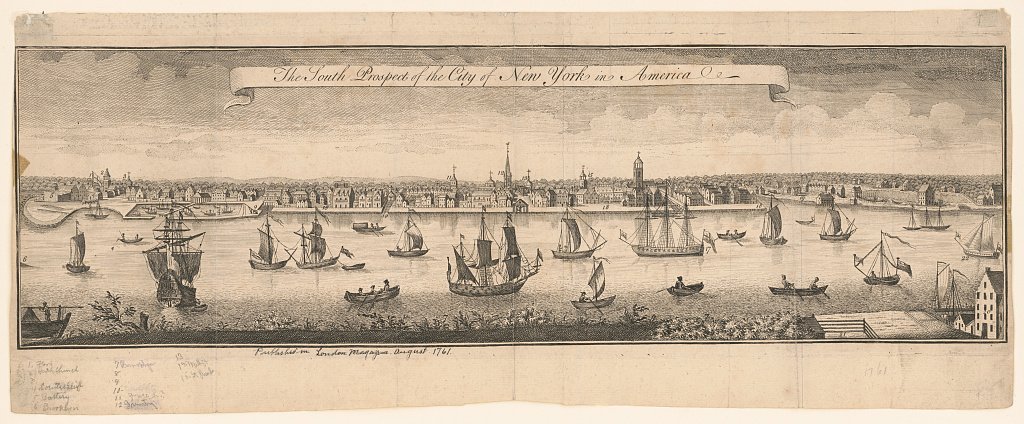
The facts
- When
- The night of April 6, 1712, in an orchard near what is now Maiden Lane and William Street
- Who
- About twenty three enslaved men, by Governor Robert Hunter's own count, from several Manhattan households
- The toll
- Nine colonists killed and five or six wounded, by Hunter's report to the Lords of Trade
- The trials
- Twenty seven people condemned by a city court; Hunter's letter counts twenty one executions, among them burning, hanging and one man broken on the wheel
- The disputed count
- The National Park Service's African Burial Ground trail marker puts the executions at nineteen; Hunter's own letter says twenty one
- The aftermath
- A 1712 law made manumission by will nearly impossible to complete, which Hunter himself protested to London in 1715
New York's enslaved population revolted only once in the colonial city's recorded history, and it began with a fire. On the night of April 6, 1712, about twenty three enslaved men gathered in an orchard near the middle of town, set fire to an outbuilding, and killed colonists who came to fight the blaze. Governor Robert Hunter reported nine dead and five or six wounded before soldiers from the fort drove the rebels into the woods and rounded them up island-wide. A city court condemned twenty seven people; Hunter's own letter to the Lords of Trade puts the executions at twenty one, some burned, some hanged, one broken on the wheel, one hung alive in chains. The city's answer was legal as much as physical. New York's assembly passed a slave code so severe that Hunter, no abolitionist, complained three years later that it made manumission by will almost impossible to complete, and that its cruelty was making the enslaved more likely to revolt, not less.
In their words
The event in the voices and documents of the people who were there. Every source links out so you can check it.
-
Letter
Hunter's own count of the court's sentences is the only official record of how many were condemned and how they were put to death.
In that Court were twenty seven condemned whereof twenty one were executed, one being a woman with child, her execution by that meanes suspended, some were burnt others hanged, one broke on the wheele, and one hung a live in chains in the town, so that there has been the most exemplary punishment inflicted that could be possibly thought of, and which only this act of assembly could Justify
Governor Robert Hunter to the Lords of Trade, June 23, 1712
Hunter's arithmetic is not perfectly clear: twenty seven were condemned, but he states twenty one executions while also noting one pregnant woman's sentence was suspended, so the number actually put to death that spring may be twenty.
Source: Documents Relative to the Colonial History of the State of New York, ed. E. B. O'Callaghan, Vol. V (Weed, Parsons & Co., 1855), p. 341 -
Letter
The manhunt that followed the attack, in Hunter's own account: soldiers, then militia from the city and Westchester, sweeping the island.
I order'd a detachment from the fort under a proper officer to march against them, but the slaves made their retreat into the woods, by the favour of the night... I caused the day following the Militia of this town and of the county of west Chester to drive the Island, and by this means and strict searches in the town, we found all that put the design in execution, six of these having first laid violent hands upon themselves
Governor Robert Hunter to the Lords of Trade, June 23, 1712
Six of the rebels killed themselves rather than be captured, by Hunter's count, before the rest faced trial.
Source: Documents Relative to the Colonial History of the State of New York, ed. E. B. O'Callaghan, Vol. V (Weed, Parsons & Co., 1855), p. 341 -
Letter
Three years after the revolt, Hunter wrote London to complain about the slave code the Assembly had passed in response to it.
an Act passed in the 11th year of Her Majesty's Reign, entituled an Act preventing, suppressing & punishing the conspiracy and insurrection of Negroes and other slaves, wherein, among other things, it is enacted that if any Negroe &c, shall be made free by the Will or Testament of any Person deceased, that the Executors of such person shall enter into security &c, immediatly upon proving said Will or Testament, which if refused to be given, the said Manumission to be void & of no effect
Governor Robert Hunter to the Lords of Trade, 1715
Hunter illustrated the law's cruelty with a specific case: a butcher named Norton who willed freedom and a legacy to a slave, an executor who simply refused to post the required bond, and a manumission left void as a result.
Source: Documents Relative to the Colonial History of the State of New York, ed. E. B. O'Callaghan, Vol. V (Weed, Parsons & Co., 1855), p. 461 -
Document
The National Park Service's own trail marker for the revolt's site gives a different execution count than Hunter's letter.
A group of enslaved Africans ambushed whites on the outskirts of the city in 1712. Nineteen blacks were executed in response to the slave uprising.
"1712 Slave Revolt," stop 7 of the African-American Freedom Trail, Northwest corner of Maiden Lane and William Street
Nineteen versus Hunter's twenty one: even the two most authoritative records available, a governor's dispatch and a National Park Service marker, do not agree on the death toll.
Source: African Burial Ground National Monument, National Park Service
What people get wrong
-
The myth The number of people executed for the 1712 revolt is settled history.
What’s true Accounts genuinely disagree. Governor Hunter's own June 1712 letter to the Lords of Trade counts twenty seven condemned and twenty one executed, with one pregnant woman's sentence suspended. The National Park Service's African Burial Ground trail marker states nineteen. Both are authoritative sources, and the discrepancy is unresolved in the surviving record.
-
The myth A slave revolt in New York implies a plantation economy like the South's.
What’s true New York's enslaved population worked docks, workshops and households in a dense port town of six to eight thousand people, not fields. That density put enslaved and free New Yorkers in close daily contact, in ways historians say made both the original plot and its brutal aftermath possible.
-
The myth The 1712 revolt pushed New York toward loosening slavery's grip.
What’s true It did the opposite. The Assembly answered with one of the harshest slave codes in the colonies, restricting movement and assembly and making manumission by will nearly impossible to complete, provisions Governor Hunter himself said were making the enslaved more likely to revolt, not less.
What it changed
- The 1712 slave code became the legal foundation for New York's slave laws through the rest of the colonial period, tightened further after the 1741 conspiracy trials.
- The Wall Street Meal Market, the city's official slave market established in 1711, kept operating for another half century, until 1762, a year the revolt did nothing to hasten.
- The execution site, near Maiden Lane and William Street, is marked today as a stop on the African Burial Ground National Monument's African-American Freedom Trail.
- The revolt is the earliest documented armed uprising by enslaved New Yorkers, and the suspicion it left behind shaped the far larger, far bloodier 1741 conspiracy trials three decades later.
The New York Shelf
Read the whole story
Paid links. If you buy a book through these links, Bookshop.org pays us a small commission and sends a share of the sale to independent bookstores.
-
The history
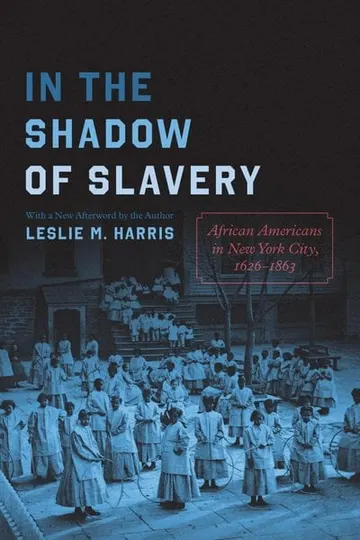
In the Shadow of Slavery (opens Bookshop.org)
Leslie M. Harris · 2003
Harris traces Black New Yorkers from the Dutch period to the Draft Riots, through enslavement, gradual emancipation, and the churches and neighborhoods they built.
-
The history
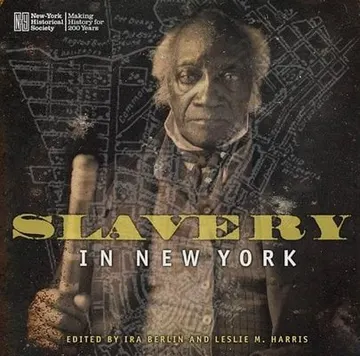
Slavery in New York (opens Bookshop.org)
Ira Berlin and Leslie M. Harris · 2005
Essays published with a New-York Historical Society exhibition follow slavery in the city from the Dutch era through emancipation in 1827, and its economic reach.
-
The history
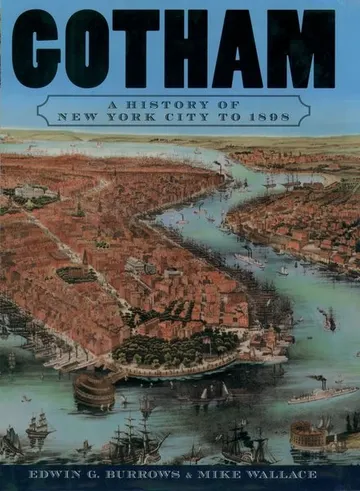
Gotham (opens Bookshop.org)
Edwin G. Burrows and Mike Wallace · 1999
Burrows and Wallace cover New York from its earliest settlement to consolidation in 1898, in a single volume of more than a thousand pages. It won the Pulitzer Prize for History.
The city is still writing this.
Four centuries end at this morning’s news. The daily brief picks up where the history leaves off: what changed in New York today and what it means, explained by breakfast.
Free. One email each morning. One-click unsubscribe. Never sold.