
Crisis & Reinvention · 1968
The Ocean Hill-Brownsville strikes
A telegram firing nineteen teachers from one Brooklyn school district triggered three citywide strikes in 1968, closing New York schools for nearly 57,000 teachers and more than a million students.
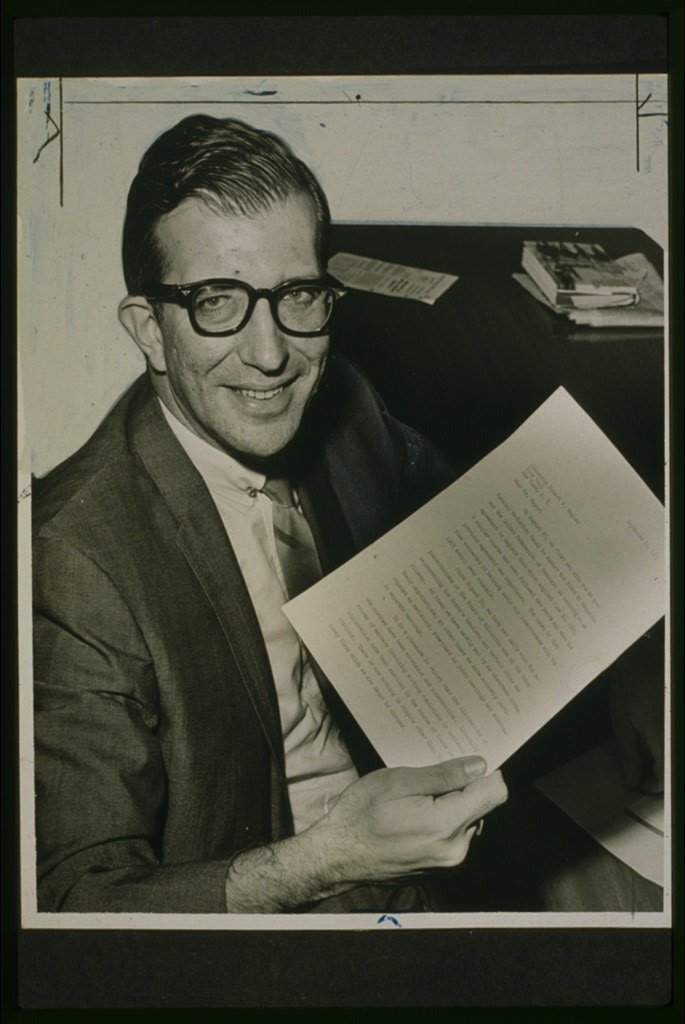
The facts
- Where
- The Ocean Hill-Brownsville Demonstration District, a majority Black and Puerto Rican section of Brooklyn, one of three experimental community-control districts created in 1967
- The spark
- A telegram from the district's governing board on May 9, 1968, notifying nineteen teachers and administrators, eighteen white and one Black, that their jobs were terminated
- The union's response
- The United Federation of Teachers, led by Albert Shanker, called three citywide strikes between September and November 1968
- The scale
- Nearly 57,000 teachers walked picket lines and more than a million students were out of class, closing schools for a combined 36 days that fall
- The settlement
- A state-appointed trustee took over the district and the nineteen staff members were reinstated, ending the strikes in mid-November 1968
- The aftermath
- New York's three 1967 demonstration districts were dissolved within a year; the legislature replaced them in 1970 with 32 elected community school boards
New York's public schools closed for thirty-six days in fall 1968 over a fight that began with a telegram. In May, the board of the Ocean Hill-Brownsville Demonstration District, a Brooklyn experiment in community control created the year before, notified nineteen teachers and administrators, eighteen white and one Black, that their jobs were finished. The teachers' union rejected the board's power to do that and called it an illegal firing without due process. The board and its backers called it a community's right to choose who taught its children. Albert Shanker led the union into three citywide strikes that fall, closing schools for nearly 57,000 teachers and more than a million students. The dispute split the city along lines of race and religion, since the city's teachers were predominantly white and Jewish and the community's leadership was Black and Puerto Rican. The strikes ended in mid-November with a state trustee running the district and the nineteen staff reinstated. Within a year the city dropped the community-control experiment.
In their words
The event in the voices and documents of the people who were there. Every source links out so you can check it.
-
Petition
Black and Puerto Rican parents in Brooklyn organized around these demands before the central Board of Education approved a pilot community-control district that spring.
The right to hire and fire all principals, assistant principals, and teachers. Those who work hard to teach our children are welcome to stay. Those who won't cooperate — must and will go! Right to control all our own money, in our own bank. That every child in our district gets the same amount of money [as] children in white neighborhoods. Right to buy our own books and supplies by direct purchase.
Ocean Hill-Brownsville parents, list of organizing demands, spring 1968
The demand for hiring and firing power is exactly the authority the district's new governing board tested a year later, when it moved against nineteen staff members.
Source: UFT Photo Collection, Robert F. Wagner Labor Archives, NYU, via the Zinn Education Project -
Document
The single act that set off six months of confrontation and three citywide strikes.
A telegram from the Ocean Hill-Brownsville governing board informed nineteen teachers and administrators, eighteen white and one Black, that their employment in the district had been "terminated."
Ocean Hill-Brownsville Demonstration District governing board, telegram to nineteen staff members, May 9, 1968
Historian Nick Juravich called the telegram "the spark" that turned a simmering conflict into open confrontation.
Source: Nick Juravich, introduction to "Community Control and the 1968 Teacher Strikes in NYC at 50: A Roundtable," The Gotham Center for New York City History -
Letter
Written as the state moved to dismantle the demonstration district, defending what it had meant for Puerto Rican families specifically.
Ocean Hill-Brownsville is the only place in the city of New York where something meaningful has been done for Puerto Rican children and Puerto Rican teachers.
Fifty-five Puerto Rican parents, letter to the New York City Board of Education, 1969
The district had hired the city's first Puerto Rican principal and built a bilingual education program during its brief existence.
Source: Sonia Lee, in "Community Control and the 1968 Teacher Strikes in NYC at 50: A Roundtable," The Gotham Center for New York City History -
Document
The union's own archive summarizing how the strikes were remembered on both sides.
An uneasy settlement, involving a state-appointed trustee in Ocean Hill-Brownsville and reinstatement of displaced teachers, left a legacy of distrust between the union and some community activists and scarred race relations in the city for many years. Shanker, again sentenced to jail for leading the strike, was lionized by many union members and reviled by political opponents as a power-mad opponent of community rights.
Archival description, United Federation of Teachers Records
Shanker was jailed twice in the 1960s for leading strikes that violated the state's Taylor Law, which bars strikes by public employees.
Source: NYU Special Collections, Tamiment Library and Robert F. Wagner Labor Archives, finding aid
What people get wrong
-
The myth The nineteen teachers were dismissed because of their race.
What’s true The two sides never agreed on this, and historians still argue it. The governing board and its supporters framed the firings as a community's right to remove staff it judged unfit for the community-control experiment; the union and its supporters framed it as a due-process violation, no charges and no hearing. Writing in the same 2018 retrospective, historians Clarence Taylor and Richard Kahlenberg reach opposite conclusions about which framing was closer to the truth.
-
The myth Ocean Hill-Brownsville was a single, isolated failed experiment in community control.
What’s true It was one of three demonstration districts the city created in 1967, alongside districts in Harlem and the Lower East Side. After the 1968 strikes, the state legislature did not abandon community control outright; in 1970 it replaced the demonstration districts with a citywide system of 32 elected community school boards, which lasted until 2002.
-
The myth The strike's scale is a single settled number.
What’s true Contemporary and retrospective counts differ. The New York Times reported roughly 50,000 teachers idle and schools closed 19 of the first 31 days as of late October 1968. A 2018 scholarly retrospective put the final total, after all three strikes, at nearly 57,000 teachers and more than a million students out of class.
What it changed
- The city dissolved its three 1967 demonstration districts within a year, but the state replaced them in 1970 with 32 elected community school boards, a partial community-control system that lasted until Mayor Michael Bloomberg won full mayoral control of the schools in 2002.
- The strikes hardened Albert Shanker's national profile; he went on to lead the American Federation of Teachers and, in 1988, proposed the model that became the modern charter school movement.
- Former Ocean Hill-Brownsville teacher and activist Jitu Weusi, formerly Leslie Campbell, went on to found the independent Uhuru Sasa Shule school in Brooklyn after the demonstration district's dissolution.
- The strikes remain a reference point in debates over teacher tenure, community control and mayoral control of schools, with historians still actively contesting what the episode should be remembered to prove.
The New York Shelf
Read the whole story
Paid links. If you buy a book through these links, Bookshop.org pays us a small commission and sends a share of the sale to independent bookstores.
-
The history
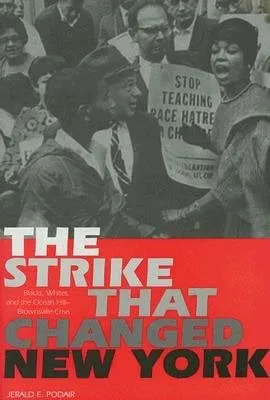
The Strike That Changed New York (opens Bookshop.org)
Jerald E. Podair · 2002
The 1968 teachers' strikes over community control of a Brooklyn school district, and how they divided Black and Jewish New Yorkers.
-
The history
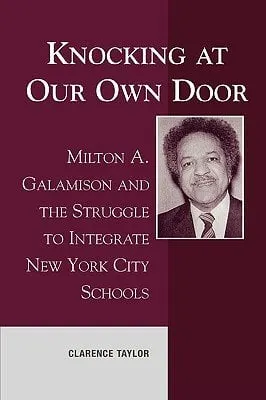
Knocking at Our Own Door (opens Bookshop.org)
Clarence Taylor · 1997
A biography of the Brooklyn minister who led the school boycotts of the 1960s, and of the city's fight over segregated public schools.
The city is still writing this.
Four centuries end at this morning’s news. The daily brief picks up where the history leaves off: what changed in New York today and what it means, explained by breakfast.
Free. One email each morning. One-click unsubscribe. Never sold.